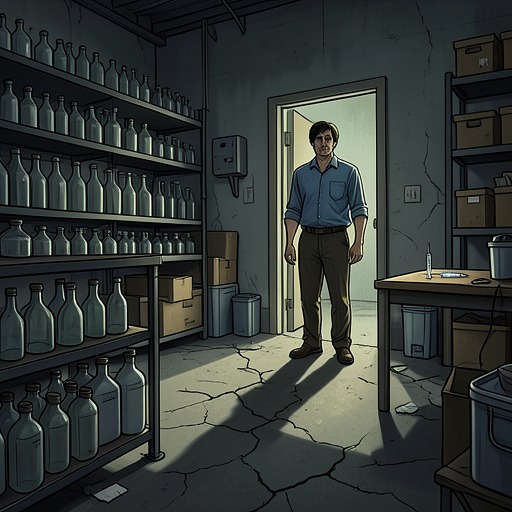
The heroin shortage during the panic
Requiem for a DreamThe heroin shortage during the panic is the force that rearranges everyday life around waiting, hustling, secrecy, and the next dose. A rumor of a Christmas supply briefly promises relief, but its conditions—an inflated price and a minimum purchase—make scarcity more punishing, not less. As the shortage persists, Harry Goldfarb and Tyrone C. Love turn toward a risky journey south, while Marion Silver’s access to heroin becomes bound to sexual exchange. The panic is both a market crisis and a narrowing of the characters’ choices: every imagined escape leads back to the need to get high.
Rumor, Price, and False Relief
The first news travels as hearsay: in a couple of days, drugs may appear on the streets. The story says that Harlan Jefferson has arranged for a few keys to be released for Christmas because he does not want people to be without during the holiday. The rumor feels plausible partly because it sounds like something he might do, but also because the people hearing it want to believe. Expectation becomes a reason to keep going through another day.
The promised supply arrives with conditions that expose how little the rumor offers. Buyers will have to purchase at least half a piece for five hundred dollars, and no one should expect the seller to offer a small bag instead. For people scraping together enough for a few bags at a time, the price is nearly impossible. The announcement starts a scramble: people hustle for the full amount, or hope to buy from those who can afford the large purchase, even as they expect street prices to climb. The possibility of a supply does not end the panic; it gives the desperate a new, expensive target.
Harry and Tyrone have only seven hundred dollars between them and cannot identify anything else they can pawn or steal to make up the difference. Harry suggests asking Marion’s former therapist, Arnold, for a few hundred dollars, promising that they can repay him within a day. Marion worries that getting the money may require her to do something she does not want to do. Harry insists that the money matters more than how they obtain it, and treats her reluctance as an obstacle to their return to dealing. The shortage has already reached into their relationship: the need for capital makes Marion’s body seem, to Harry, like another resource for keeping their drug supply and business hopes alive.
Waiting on the Streets
The anticipated return to normal never arrives. The characters fall back into the routine of raising just enough money to get straight, without anything left over. Marion can obtain sleeping pills through her doctors, but when she and Harry use the last supply at night and wake without drugs, she becomes hysterical and trembles as she injects a pill. Sometimes she misses a shot, burning and swelling her arm. The shortage turns each morning into a reckoning over what remains, who used it, and who must go out to find more.
Harry and Marion’s arguments reveal how addiction transfers responsibility from one person to another. Marion blames Harry for her missed injection; Harry counters that she wanted an extra bag the night before and points out that he is the one who goes out to buy drugs. Even when he helps her find a vein and steady herself, the practical care does not restore control. He advises her to use pills instead of injecting, but both understand that the substitute cannot satisfy the same compulsion. Their brief respite comes from the injection itself, followed by the return of the need that brought them to it.
For Harry and Tyrone, buying drugs becomes a physical ordeal. They spend hours outside in bitter cold, stamping their feet and hiding their hands in their jackets, afraid to step into a coffee shop and miss a connection. Police activity adds another danger: they avoid staying too long with anyone in case an arrest catches a group together. The streets offer neither safe shelter nor reliable information. Rumors circulate about a supplier with a large amount who will trade only for sex, while buyers try to locate Tyrone’s connection without drawing attention. Eventually the two men find drugs, but they have been numb with cold and can barely walk.
As the crisis deepens, the shortage becomes visible in the crowds of sick users roaming through snow and sleet, trying to find drugs or money to buy them. Harry and Tyrone sometimes spend all night moving between possible locations and still miss the connection. When they do manage to buy heroin, they divide and stretch the bags, take what they need, and begin searching again. Dead and dying bodies lie in hallways and the debris of abandoned buildings, but the men ignore them and keep moving. Survival has contracted to the next connection.
Marion’s Exchange with Big Tim
The shortage changes Marion’s access to drugs through a different route. When Harry and Tyrone need money to buy heroin, Harry urges her to approach Arnold, but she fears what she may have to do. Later, in the hope of obtaining a dependable supply, she goes with them to Big Tim. On the ride, she is apprehensive, though heroin has made the prospect feel manageable; her main concern is whether Big Tim will give her the drugs he has promised. Harry feels relief that they may get a supply without continuing to scuffle through the cold streets, but he also dislikes the sexual bargain. He tries to reassure himself that Marion is free to decide and that the exchange is her business.
Big Tim’s apartment contrasts sharply with the streets where the shortage is being fought out. He welcomes Marion into a large apartment on the twenty-second floor, with a view over Central Park, French doors, and Coltrane playing. Drinks, hash, and the comfortable surroundings soften her apprehension. She had not thought of herself as a dope fiend, and the setting and Big Tim’s casual manner unsettle her expectations of what the meeting will be. The contrast does not mean that the transaction is equal: Marion’s immediate need for heroin remains the condition shaping what she can choose.
When Big Tim makes sexual demands, Marion first recoils and becomes sick. She trembles alone in the bathroom, frightened but focused on the need to obtain the drugs. She returns, resumes the encounter, and performs the act that secures her share. Her response is not presented as uncomplicated consent or as simple passivity: she knows why she is doing it and acts to get the supply, while dependence and fear sharply restrict her alternatives. The heroin she receives then suppresses her disquiet. Later, after a more elaborate sexual party arranged by Big Tim, she is disturbed both by what she has done and by how readily she did it; once she has her share and gets high, the discomfort gives way to the thought that the drugs are worth the cost.
From Shortage to the Southward Plan
Even after Marion begins seeing Big Tim regularly, the scarcity shapes the household through concealment as well as need. She tells Harry she is receiving only six bags, while he takes three without telling Tyrone. When Harry buys drugs, he also holds a few bags back from Marion. These small acts of withholding grow inside a shared dependence: the shortage encourages each person to guard a private reserve even while their lives remain entangled in the same search.
The men hear that major suppliers are in Florida, sitting on large quantities while New York users suffer and prices rise. The story may be familiar, but it gives Harry an idea: instead of waiting for a local connection, he and Tyrone could drive south to the source. Harry imagines buying there, returning with a large supply, and selling at a price they control. Tyrone objects that Miami is unfamiliar and far away; Harry counters that the streets at home are dangerous and that they have little to lose. The appeal is partly financial, but the prospect of warmth matters too. In the freezing city, a trip to Florida becomes an imagined passage from helpless waiting to control.
The plan exposes the panic’s central trap. The shortage pushes Harry and Tyrone toward a venture that sounds like a way out precisely because they can no longer endure the ordinary search. Yet their reasoning is shaped by desperation: they assume they can locate drugs in an unfamiliar place, obtain the money to get there, and return before the supply disappears. The rumor of abundant drugs in the sun gives the cold streets a destination, but it does not free them from the demands of addiction or guarantee that the imagined solution will work.
Narrative Significance
The shortage links separate forms of desperation without making them identical. Harry and Tyrone confront the market through money, risk, and movement; Marion’s supply is tied to sexual bargaining and private concealment. Across these experiences, heroin repeatedly offers a temporary answer—enough to stop sickness, calm fear, or make an unbearable situation feel possible—while leaving the search intact. The Christmas rumor promises abundance, but the episode’s concrete realities are a five-hundred-dollar minimum purchase, long waits in freezing weather, and the exchange of sex for a few bags. The panic measures the distance between a rumored supply and actual security, and shows how that distance makes each character’s available choices more desperate.